In 2026, stopping destructive scratching begins with understanding the cat, not punishing it. Many owners ask, “why do cats scratch the outside of their pet house?” The answer usually involves several needs at once. Scratching stretches the shoulders and back, removes loose claw layers, and leaves visible and scent-based signals. The rough surface also feels satisfying beneath the paws.
Dr. Mikel Delgado, a certified applied animal behaviorist and cat behavior consultant, explains, “Scratching is a normal behavior that cats need to express.” This expert perspective changes the practical approach. A cat may scratch the pet house because its material is stable, familiar, and positioned in a meaningful area. It may also scratch after waking, near a doorway, or beside a favorite resting place. These details matter.
Redirect the behavior gently. Place a tall, sturdy scratching post beside the house, then add a horizontal cardboard scratcher nearby. Reward investigation with calm praise or a small treat. Never shout, spray, or physically force the cat’s paws against a surface. That can create fear and weaken trust. Trim claws carefully when appropriate, but remember that trimming does not remove the underlying need to scratch.
Observe for several days. Is the house fabric loose? Does the cat scratch more after visitors arrive? I once underestimated location and moved a scratcher too far away. It was rarely used. The better plan combines suitable textures, secure placement, patience, and regular observation. Some cats still prefer the house exterior. That is not failure. It may signal that the house needs a more durable covering or a nearby approved scratching zone.
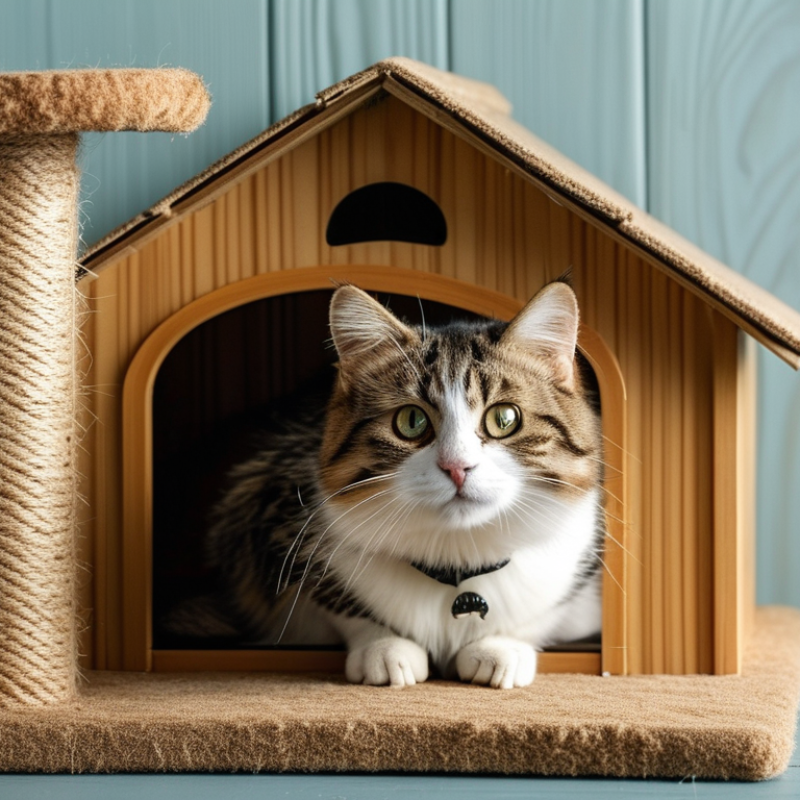
Cats rarely scratch outside their pet house to be difficult. Scratching is normal communication, exercise, and claw maintenance. The 2022 AAFP/ISFM Feline Environmental Needs Guidelines describe scratching as a core feline behavior, not a training failure. Cats also leave visible marks and scent from glands in their paws. This makes a doorway, wall corner, or favorite route especially attractive. A 2023–2024 APPA National Pet Owners Survey estimates that 46.5 million U.S. households own cats, so this behavior affects many indoor homes.
The location may be the real problem. If the scratching post sits inside a dark house, your cat may avoid it when the entrance feels narrow. Some cats prefer rough vertical surfaces. Others choose flat, stable boards. My first setup looked tidy but moved whenever my cat pulled it. That mistake mattered. Sudden scratching can also reflect stress, conflict with another animal, or discomfort. If the behavior changes quickly, a veterinary examination is sensible, especially with limping or excessive licking.
Tips: Place a tall, sturdy scratcher beside the damaged area. Offer a second horizontal surface nearby. Test different textures, such as sisal, cardboard, or untreated wood. Reward use with calm praise or a small food treat. Do not punish scratching; it can increase fear and hide the real cause. Trim claws only with proper guidance, and never remove the claws. Check the house entrance, too. It may be cramped, unstable, hot, or poorly positioned. Cats can be particular. Sometimes, annoyingly, they are right.
| Observed Behavior | Most Likely Reason | What to Do | Recommended Location or Material | Expected Progress | Important Safety Note |
|---|---|---|---|---|---|
| Scratches the floor or wall beside the pet house | The scratching surface is too far away, unstable, or does not match the cat’s preferred angle. | Place a stable scratching post or pad directly beside the scratched area. Move it only after the cat uses it consistently. | Offer both vertical and horizontal surfaces; use sturdy sisal, cardboard, or untreated wood. | Some cats show improvement within several days; habit changes may take a few weeks. | Do not force the cat’s paws onto the scratching surface. |
| Scratches immediately after waking | Stretching and normal post-rest scratching behavior. | Put an appropriate scratching surface beside the sleeping area, including beside the pet house entrance. | A tall, steady post is useful for cats that stretch upward; a flat pad suits cats that scratch horizontally. | The cat may begin using the new surface when it is placed at the usual scratching point. | The pet house should have a clear exit and should never be used to confine the cat as punishment. |
| Scratches after seeing people, animals, or outdoor activity | Scratching can leave visual and scent marks and may occur during excitement or territorial tension. | Reduce stressful visual triggers, provide a scratching station near the viewing area, and reward calm behavior. | Use a stable post near—but not blocking—the window or doorway. | Improvement depends on how strongly the trigger affects the cat and whether the trigger can be reduced. | Avoid punishment, yelling, or spraying water because these can increase fear and stress. |
| Uses the pet house only as a scratching target | The house may have a satisfying texture, may wobble, or may be positioned in a socially important area. | Keep the house secure, protect vulnerable surfaces temporarily, and place an attractive scratcher next to it. | Choose a scratcher that does not shed loose fibers or contain sharp edges, staples, or toxic finishes. | Redirecting is usually more effective when the alternative is immediately available. | Inspect the pet house regularly for loose pieces that could be swallowed. |
| Scratches several areas around the home | Scratching is normal maintenance, communication, exercise, and emotional release—not simply misbehavior. | Provide multiple scratching stations in different rooms and near sleeping areas, entrances, and favored routes. | Use different shapes, heights, and textures until the cat’s preference is clear. | A consistent setup can reduce unwanted scratching while preserving normal behavior. | Do not remove every scratching option; cats need an appropriate outlet for this behavior. |
| Ignores every new scratching surface | The surface may be unstable, poorly positioned, unfamiliar, or unattractive to that individual cat. | Test one change at a time and observe whether the cat prefers vertical versus horizontal scratching and coarse versus smooth texture. | Secure the base and place the scratcher where scratching already occurs. | Preference testing may require several days rather than a single introduction. | Avoid strong fragrances or chemical cleaners on the scratching surface. |
| Scratching suddenly increases or becomes destructive | A sudden change may be associated with stress, environmental disruption, pain, skin problems, or another medical issue. | Review recent changes in the household and arrange a veterinary examination if the behavior is abrupt, intense, or accompanied by other symptoms. | Maintain predictable routines and provide hiding, resting, climbing, and scratching choices. | Progress depends on identifying and addressing the underlying cause. | Seek professional advice for limping, sensitivity, excessive licking, hair loss, wounds, appetite changes, or unusual vocalization. |
| Scratches despite regular play | Play meets exercise needs but does not replace the cat’s need to stretch, maintain claws, and communicate through scratching. | Continue interactive play while separately providing accessible scratching stations and rewarding their use. | Place scratchers along normal walking paths and near favorite resting places. | Use a combined routine of enrichment, redirection, and positive reinforcement. | Keep rewards small and appropriate, and supervise toys with strings or detachable parts. |
Scratching supports communication, stretching, and claw maintenance. The outside surface may feel better than the house wall. Watch the timing and location.
Place it beside the entrance or preferred corner. Do not hide it across the yard. Nearby works better.
Choose one tall surface for full-body stretching. Add a flat cardboard or woven mat. Offer two textures for several weeks.
Use a heavy, stable base. It should not wobble when your cat pulls hard. Avoid loose fibers, sharp staples, peeling paint, and treated wood.
Check them every week. After rain, inspect the entrance and nearby materials. Remove damp bedding, trapped leaves, and loose wood.
Praise calm scratching immediately. Offer a small treat when appropriate. Use catnip only if your cat responds to it.
No. Punishment can create fear and more stress. Redirect the behavior to a stable surface placed nearby.
Some cats need several days. Keep the board in place and observe small clues, such as paw marks. I once moved mine too quickly and lost progress.
Keep the area dry, clean, and clear. Rotate worn surfaces and repair damage early. A quiet resting spot may help a restless cat.
Observe shredded fibers, paw marks, and daily use. Cats differ. My attractive post failed because its location was wrong.
Cats may scratch the area outside their pet house for several reasons, including instinctive claw maintenance, scent marking, stretching, boredom, stress, or a desire to make the entrance more comfortable. Understanding why do cats scratch the outside of their pet house is the first step toward solving the problem. Observe when and how the scratching happens, and check whether the house is too small, unstable, dirty, or placed in an uncomfortable location.
Provide safe, appealing alternatives such as sturdy scratching posts, textured mats, or vertical and horizontal scratchers near the house. Encourage your cat to use them with gentle play, familiar scents, or rewards, and praise the desired behavior immediately. Avoid punishment, which can increase fear and confusion. Regularly trim claws when appropriate, clean scratched areas, repair damaged surfaces, and keep the surroundings calm and engaging. With consistent redirection, positive reinforcement, and proper maintenance, most cats can develop healthier scratching habits.

 Wilsons Pets